
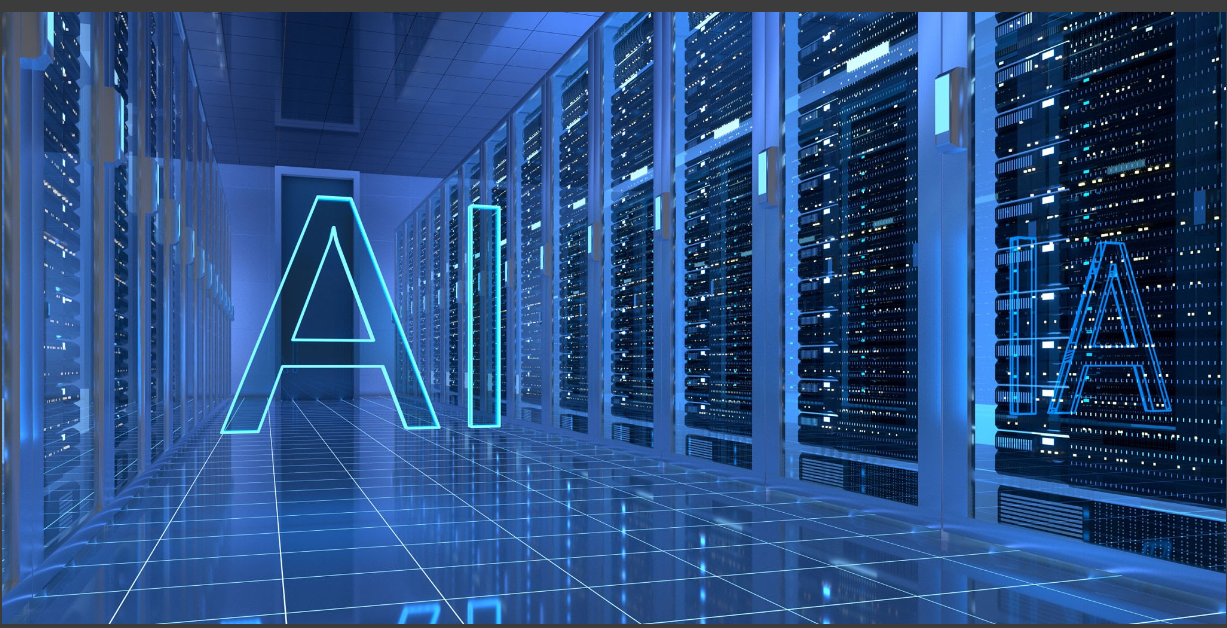
When you think of the internet, you might picture invisible wireless signals or sleek smartphones. But the reality is much more physical. The internet lives in massive, highly secured warehouses called data centers. These facilities are the beating heart of our digital lives, housing the servers, storage systems, and networking gear that make everything from streaming movies to global finance possible. But right now, the internet’s brain is undergoing a radical, physical rewiring. The culprit? Artificial Intelligence.
What Exactly is a Data Center?
At its simplest, a data center is a fortress built to keep thousands of computers running 24/7 without interruption. Inside, you’ll find tall cabinets called “racks” filled with three main types of hardware:
- Servers: The heavy-lifting computers that process requests.
- Storage: Massive arrays of drives holding the actual data.
- Networking: The circulatory system of routers and miles of fiber-optic cable.
To keep this all running, data centers require immense support infrastructure. They need industrial-grade cooling to prevent servers from melting down, massive backup battery banks and diesel generators to survive power grid failures, and intense physical security.
The AI Disruption
For years, data centers were built to house standard CPUs. But the rise of generative AI has changed the physics of the data center.
AI relies on massive clusters of Graphics Processing Units (GPUs), like NVIDIA’s Blackwell chips. These chips consume significantly more power, run much hotter, and operate continuously for “inference” workloads (like running ChatGPT) rather than in short bursts.
You cannot simply put an AI server rack into an older facility. It would trip the breakers, overwhelm the air conditioners, and violate fire codes. This reality is forcing data center architects to redesign facilities from the ground up, creating “intelligence factories”.
From Air to Liquid Cooling
The most visible change is how we keep these machines cool. Traditional data centers blow massive amounts of chilled air through the aisles. But air cannot absorb the extreme heat generated by dense AI racks.
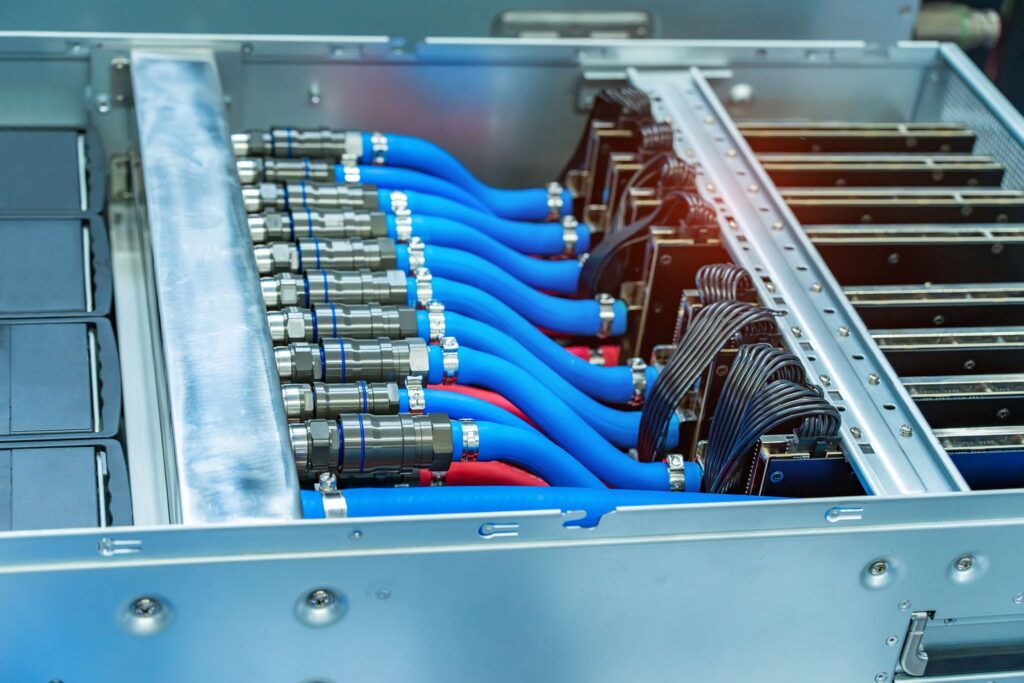
To survive, new facilities are adopting advanced liquid cooling. The most common method now is Direct-to-Chip (Cold Plate) cooling, where coolant is pumped through thin tubes directly to metal plates sitting on top of the GPUs. In more extreme setups, entire servers are submerged in tanks of non-conductive fluid (immersion cooling).
The Gigawatt Challenge
A traditional enterprise server rack typically consumes 5 to 15 kilowatts (kW) of power. An AI rack can draw anywhere from 120 kW to over 140 kW.
This density requires a staggering amount of electricity. Before 2024, a large data center might need 10-20 megawatts (MW). Today, new AI-ready sites are designed for 100 to 750 MW, with some mega-campuses planned for a full gigawatt (1,000 MW)—enough to power a small city.
Because the traditional electrical grid cannot build new transmission lines fast enough, data center operators are being forced to find their own power. We are seeing a shift toward “behind-the-meter” solutions, where data centers co-locate with solar farms, battery storage, natural gas plants, and even explore Small Modular Reactors (nuclear) to guarantee their energy supply.
The internet is no longer just about moving data; it’s about generating intelligence. And building the physical infrastructure to support that intelligence is one of the greatest engineering challenges of our time.